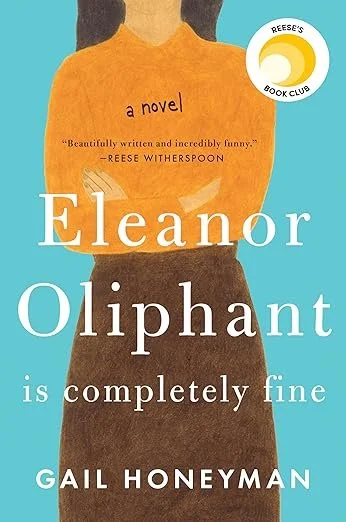
Who says you need to treat a serious subject seriously for it to have serious impact? Eleanor Oliphant Is Completely Fine throws that idea out the window and all the way out of the stratosphere.
The eponymous protagonist of the book is a socially awkward, lonely woman who often goes entire days without speaking to someone or being touched by someone. As she says, “The scalp massage at the hairdresser, the flu jab I had last winter—the only time I experience touch is from people whom I am paying, and they are almost always wearing disposable gloves at the time.”
What Eleanor lacks in social grace, she makes up for with responses that seem confident, even autocratic. But as these don’t stem from true self-assurance, but rather from a lack of self-awareness and any kind of filter, she comes across as odd and hilarious at best, and bewildering or shocking at worst.
What this means? Loads of unintentional humour, scenes that make you chuckle, and situations that make you wish you could step into the story, give her a hug, and ask if she’d like to be friends (an offer she would no doubt politely but firmly refuse).
But underneath the levity, there is something traumatic lurking: mental health issues, abuse, neglect, and social isolation—it’s as dark as it gets.
The power of this book is how it handles these themes with grace and compassion. Don’t mistake the humour as a distraction from the darkness—it’s because these subjects are handled with velvet gloves that the underlying scars feel even more jarring by contrast.
At its core, the book is about unraveling the mystery of Eleanor Oliphant. Does she find someone to connect with? More importantly, does she find herself? But it’s also a reminder to look deeper in our everyday interactions. When we ask someone how they’re doing and they say they’re “fine”—are they really?
Vidhya Kripashankar
Copywriter | Creative Director
Featured